PPF or Ceramic Coating: What's the Difference?
August 30, 2026
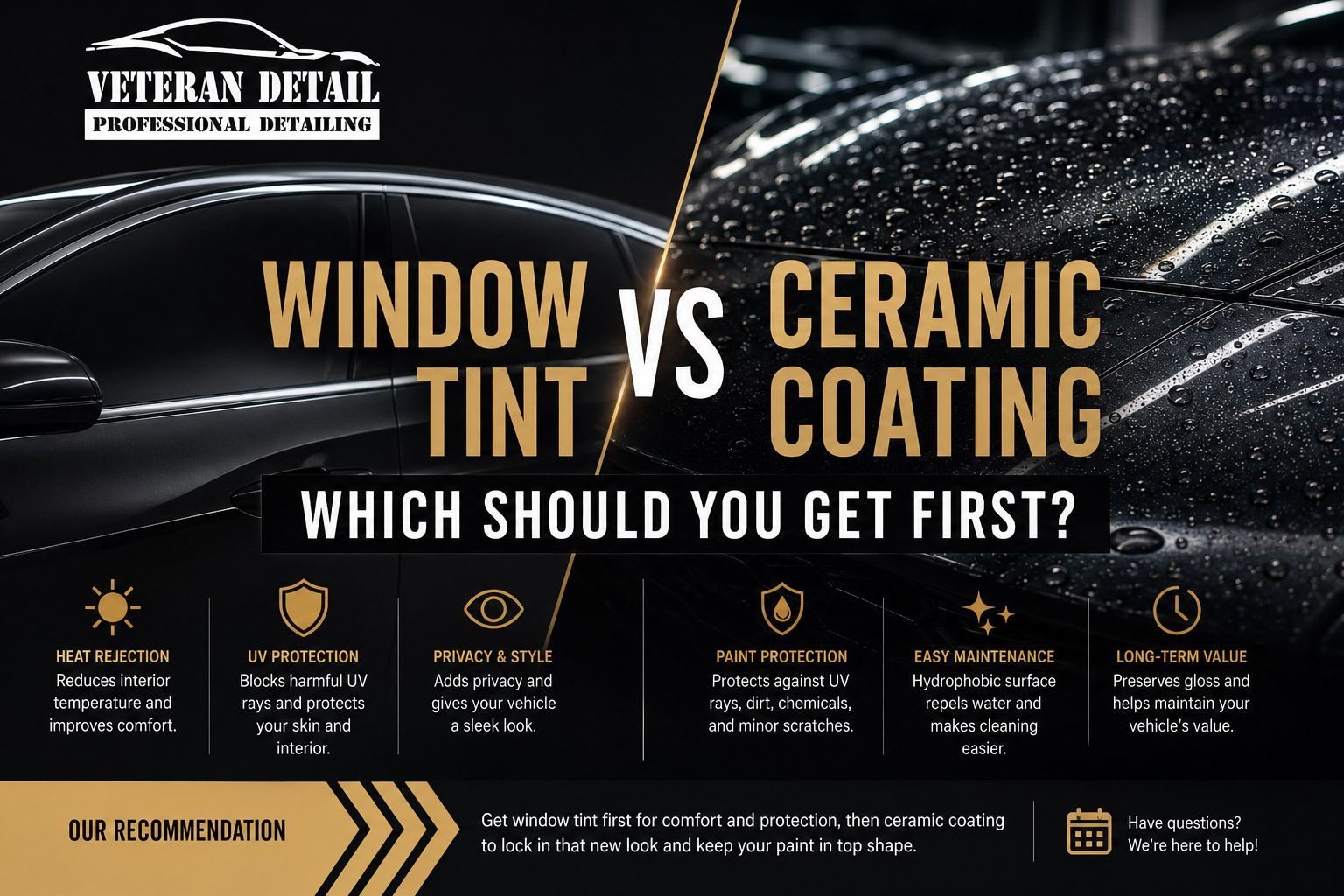
Walk into any vehicle protection conversation and these two products come up together almost immediately. Paint protection film and ceramic coating both protect your vehicle's exterior. Both are considered premium services. And both can leave you wondering whether you need one, the other, or both—especially when some shops recommend layering them. The confusion is understandable, because the products are genuinely different in what they are, how they work, and what threats they address. Here is a clear breakdown.
What They Are: A Fundamental Difference
Paint protection film and ceramic coating are built from completely different materials and function through completely different mechanisms. They protect paint in different ways and excel against different types of damage.
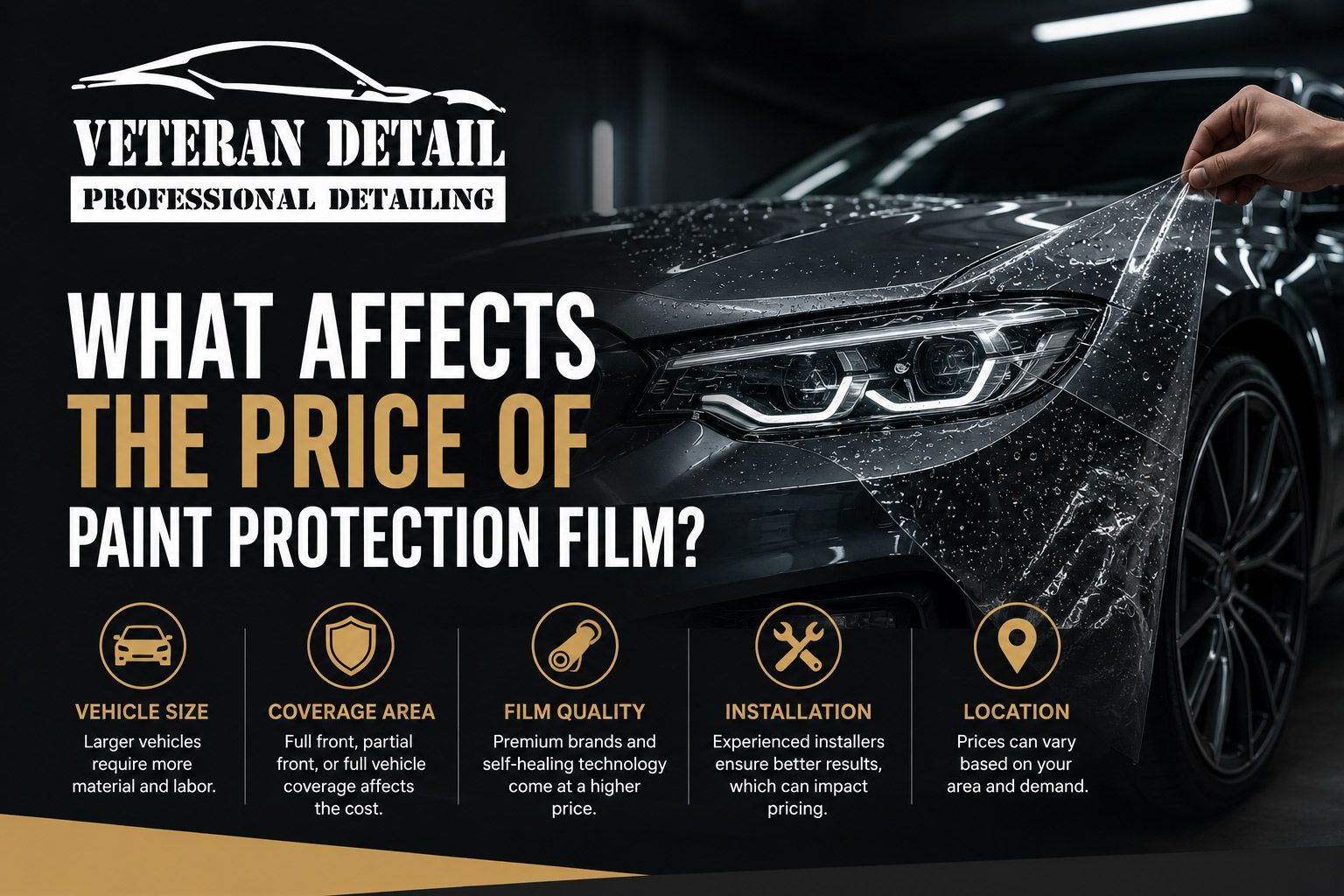
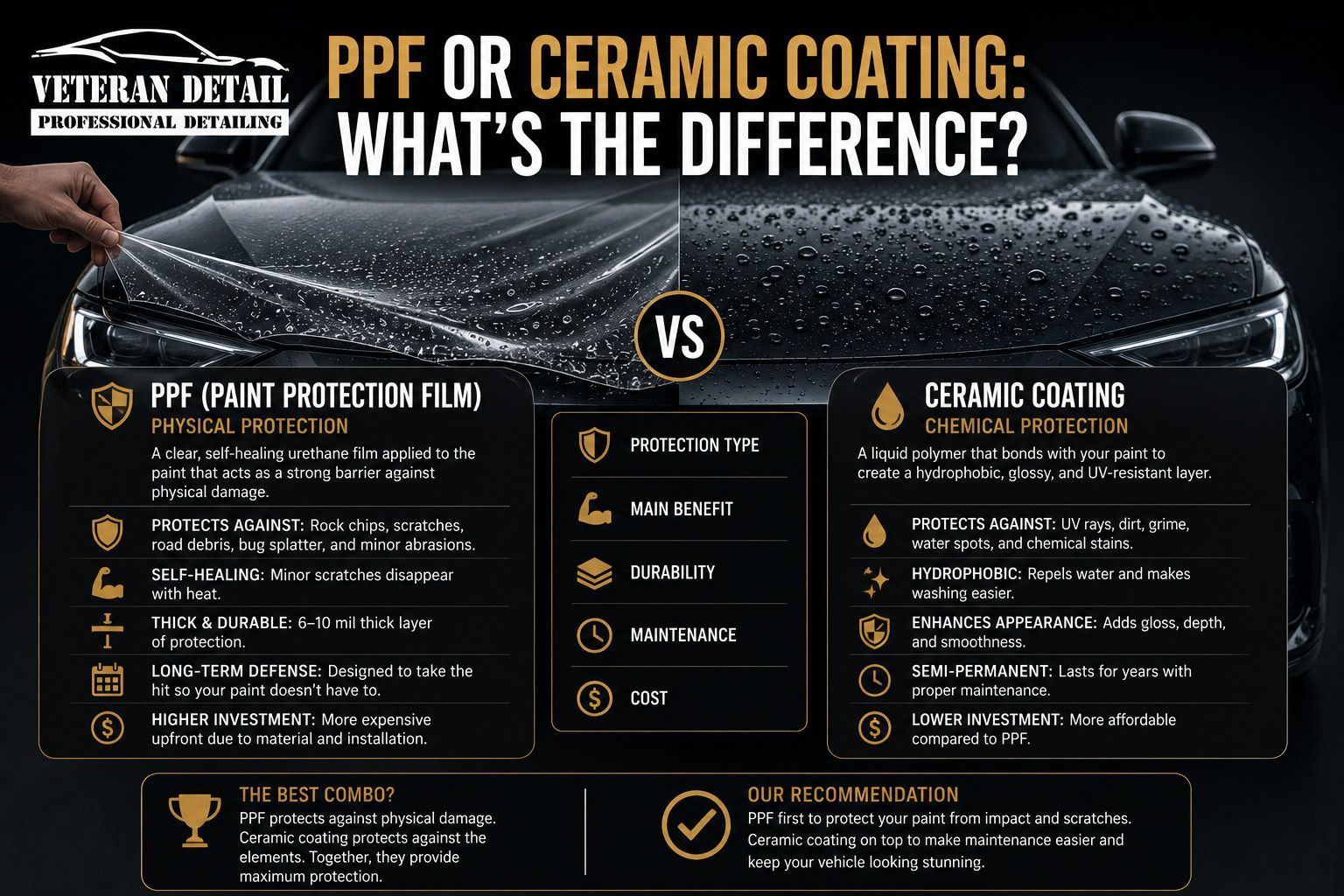
Paint protection film is a physical barrier. It is a multi-layer thermoplastic urethane film, typically 6 to 8 mils thick, that is adhered to the paint surface. When a rock strikes the hood of a vehicle protected with PPF, the film absorbs the impact energy and prevents the paint beneath from chipping. The film takes the damage instead of the paint. High-quality PPF has a self-healing topcoat that allows the film surface to recover from minor abrasions with heat exposure.
Ceramic coating is a chemical bond. It is a liquid silicon dioxide (SiO2) or silicon carbide compound that bonds molecularly to the paint surface when properly applied and cured. It does not add meaningful physical thickness to the paint—its protection comes from surface chemistry rather than physical absorption. The hydrophobic surface repels water, resists chemical contaminants, and provides UV protection, but it will not prevent paint chips from road debris.
Head-to-Head: What Each Product Does and Doesn't Do
The clearest way to understand the difference is to look at how each product performs against specific threats. The table below compares PPF and ceramic coating across the damage types that matter most to vehicle owners in the St. George, UT area and across Utah:
| Threat Type | PPF Protection Level | Ceramic Coating Protection Level |
|---|---|---|
| Rock chips and road debris | Excellent — film absorbs impact | None — coating too thin to absorb impact |
| UV oxidation and fading | Good — film blocks UV at the surface | Excellent — UV inhibitors in coating chemistry |
| Water spots and mineral deposits | Good — surface sheds water | Excellent — hydrophobic surface repels water effectively |
| Bug acids and bird droppings | Excellent — film resists etching | Good — easier to clean, but prolonged contact still etches |
| Swirl marks from washing | Good — self-healing topcoat recovers minor abrasions | Moderate — coating adds hardness but doesn't eliminate swirl risk |
| Chemical contaminants | Good — film creates physical barrier | Excellent — hydrophobic chemistry resists bonding |
| Industrial fallout and brake dust | Good — barrier prevents bonding | Excellent — surface allows easy removal |
| Light scratches and key marks | Excellent (self-healing on minor scratches) | None — coating is too thin to absorb scratching |
Installation, Maintenance, and Lifespan
PPF and ceramic coating also differ significantly in how they are installed, how they are maintained, and how long they last before replacement or reapplication is needed.
PPF installation is a physically demanding process that requires cutting film to fit each panel and applying it without lifting edges, visible seams, or trapped contamination. A full vehicle wrap can take several days even for experienced installers. The film is durable but is a physical product that eventually reaches end of life—premium PPF typically carries 10-year warranties.
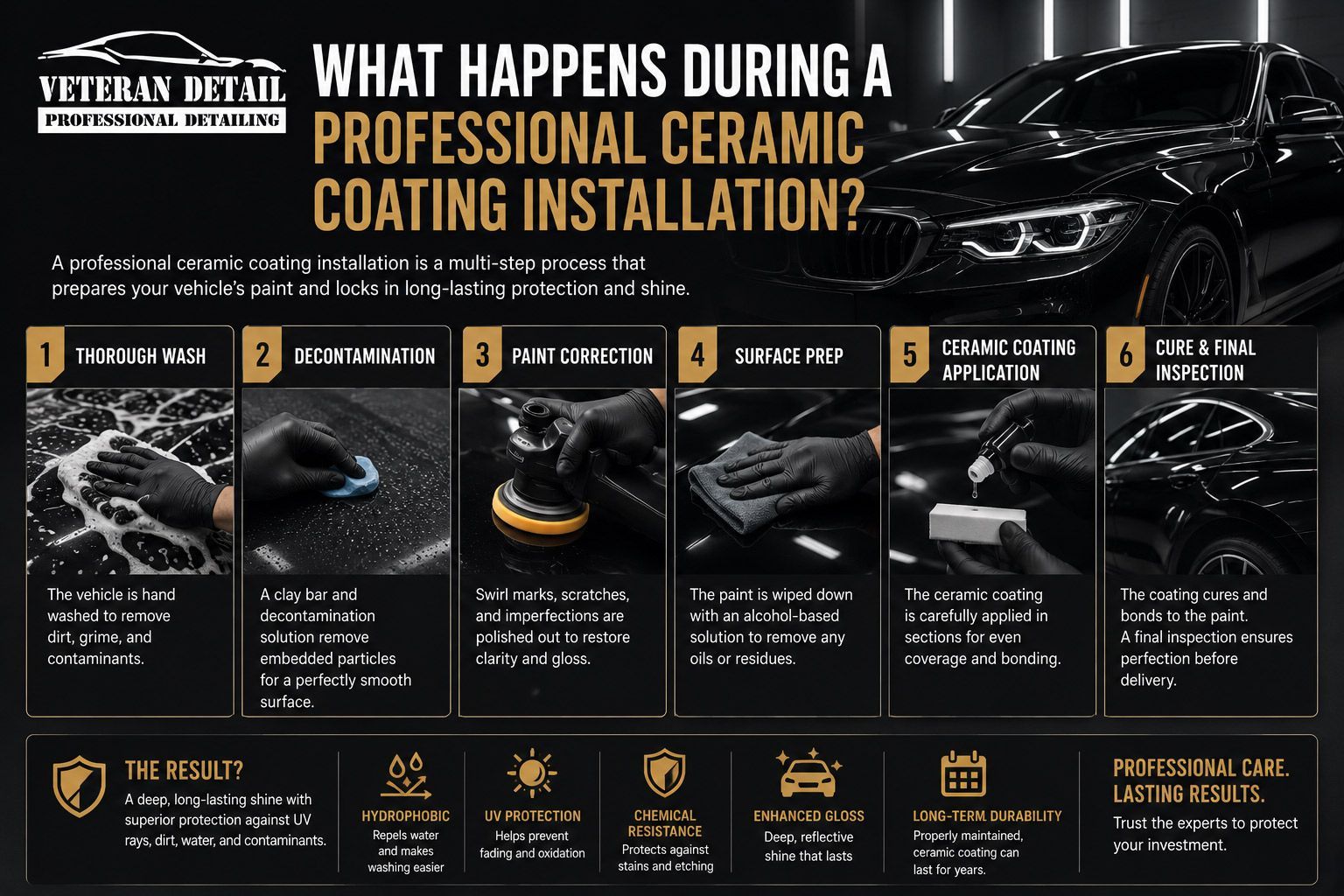
Ceramic coating installation is less about physical skill and more about preparation and chemistry. The coating itself is applied relatively quickly, but the paint must be flawlessly prepared—decontaminated and corrected—before application. Any surface imperfections are locked in beneath the coating. Curing requires controlled temperature and humidity. Professional coatings can last 5 to 10 years with proper maintenance.
Maintenance also differs. PPF requires cleaning but does not need reapplication within its rated lifespan. Ceramic coating benefits from periodic professional maintenance inspections and, on some products, a top coat refresh application every few years to maintain peak hydrophobic performance.
When to Use One, the Other, or Both
The decision between PPF and ceramic coating depends entirely on what threats you're most concerned about and what your vehicle needs most. For vehicle owners in Hurricane, UT and the southern Utah region, where UV intensity is particularly high and highway driving on routes like I-15 creates significant rock chip exposure, both products together represent the most comprehensive protection strategy.
Consider the following decision framework:
- Choose PPF if: Your primary concern is rock chips, road debris damage, and physical impact protection—especially on highway commutes or canyon driving routes.
- Choose ceramic coating if: Your primary concern is UV oxidation, water spotting, ease of maintenance, and long-term paint gloss preservation without physical impact risk.
- Choose both if: You want comprehensive protection. The most effective configuration is PPF on high-impact zones topped with ceramic coating for UV protection, hydrophobic performance, and enhanced gloss.
Frequently Asked Questions
Can ceramic coating be applied over PPF?
Yes, and this is a common combination used by vehicle owners seeking comprehensive protection. Ceramic coating applied over PPF adds UV and hydrophobic protection to the film surface, makes the film easier to clean, and enhances gloss. The coating bonds to the film's topcoat rather than to paint directly, which means proper film surface preparation is still required before coating application.
Which product is better for resale value?
Both improve resale value, but in different ways. PPF preserves factory paint in near-original condition, which is the single most important factor in a used vehicle inspection. Ceramic coating preserves paint gloss and cleanliness over time. Vehicles with documented PPF and ceramic coating from a reputable installer often command a premium in private sale markets.
Does PPF provide the same UV protection as ceramic coating?
PPF does provide UV protection as part of its film construction, but ceramic coatings are generally formulated with more aggressive UV inhibitor chemistry. This is one reason the combination of PPF on impact zones plus ceramic coating on all painted surfaces is considered the most complete approach—you get the physical barrier of PPF and the superior UV chemistry of the coating.
How do I know which areas of my vehicle need PPF vs. ceramic coating?
As a general rule, any panel that faces forward or is directly exposed to highway debris benefits most from PPF. Panels that primarily face UV, rain, and environmental contamination benefit most from ceramic coating. A professional assessment of your vehicle's high-risk areas, your driving patterns, and your budget will clarify which product to prioritize on which surfaces.
If I have PPF on part of my car, should the unprotected panels still get ceramic coating?
Yes. Ceramic coating on panels not covered by PPF provides UV and contaminant protection on those surfaces. It also creates a more uniform appearance across the vehicle and simplifies maintenance by giving all exterior surfaces similar water-repellent properties. The two products complement each other cleanly.
Conclusion
PPF and ceramic coating protect your vehicle against different threats through different mechanisms, which is why the most complete protection plans use both. PPF handles physical impact—the rock chips and road debris that nothing else stops. Ceramic coating handles the chemical and UV threats that accumulate over time. Neither product does everything the other does, and understanding that distinction is the key to spending your protection budget effectively. Veteran Detail installs both products and can help you design a protection plan that matches your vehicle, your driving conditions, and your goals. Reach out to schedule an assessment and get a clear recommendation.