Window Tint vs Ceramic Coating: Which Should You Get First?
July 26, 2026
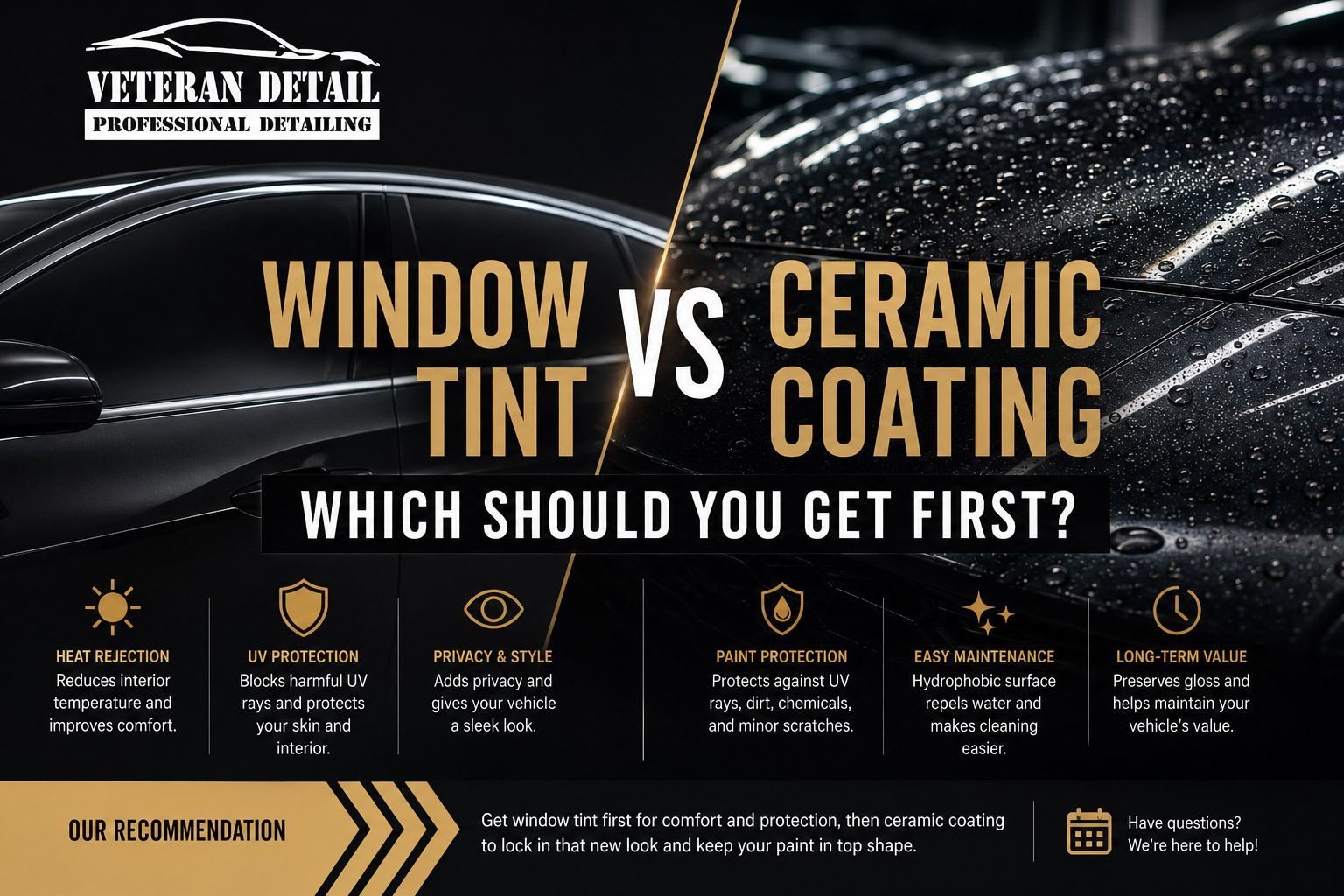
If you're building out a vehicle protection plan and budget is a consideration, you're going to hit this question at some point: window tint or ceramic coating—which one comes first? They're two of the most popular protection services, they serve different purposes, and they don't conflict with each other. But if you're sequencing them, the order matters less than understanding what each service actually does and which one addresses your most pressing concern. Here's how to think through it.
What Each Service Actually Does
Before comparing them, it's worth being precise about what these two services protect and how they do it.
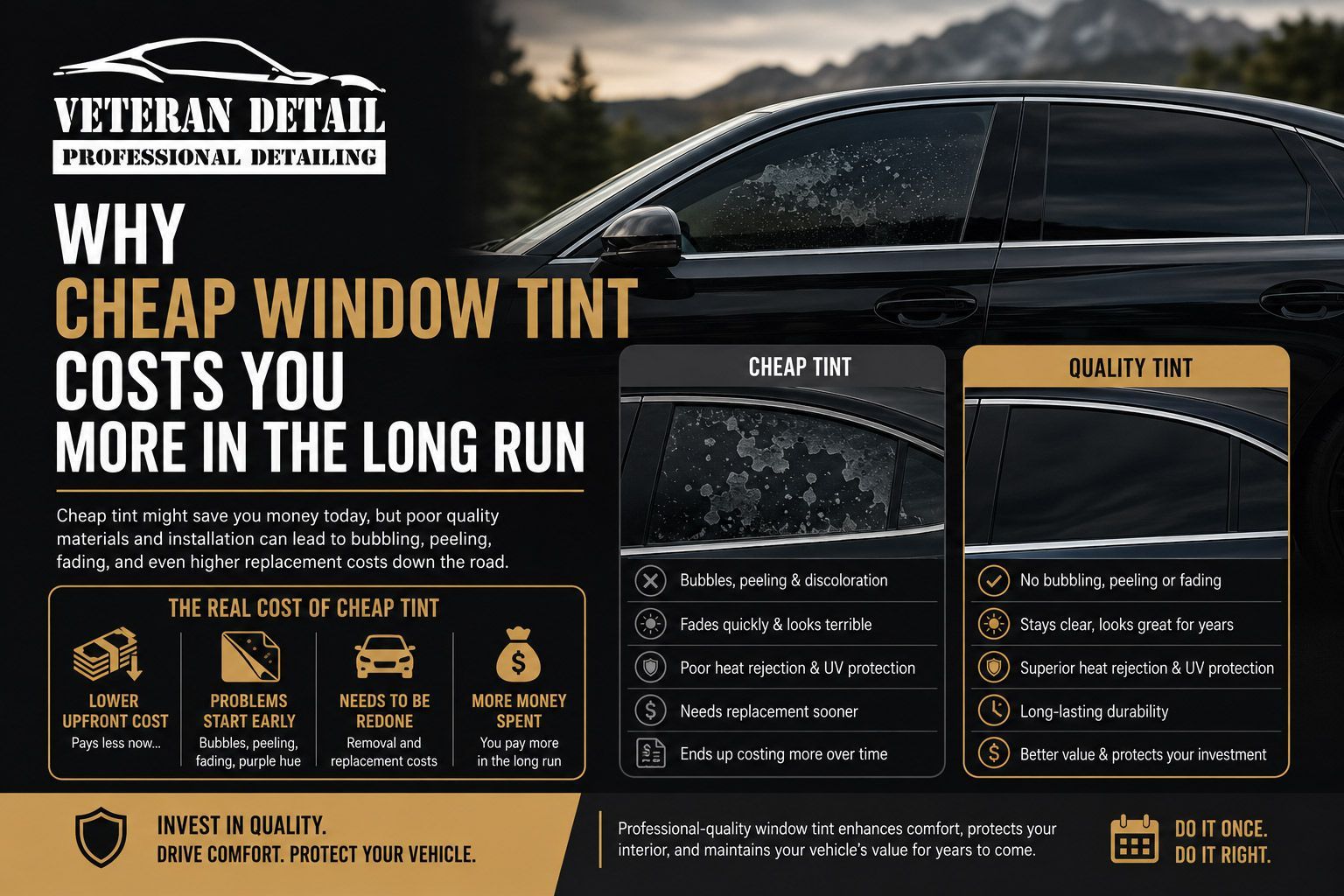
Window tint is a polyester film applied to the interior surface of your vehicle's glass. It reduces solar heat transmission, blocks UV radiation, cuts glare, and adds privacy. In a place like Lehi, UT where summer temperatures regularly push cabin temperatures above 130 degrees in direct sun, quality window tint makes a measurable difference in driving comfort and interior material preservation.
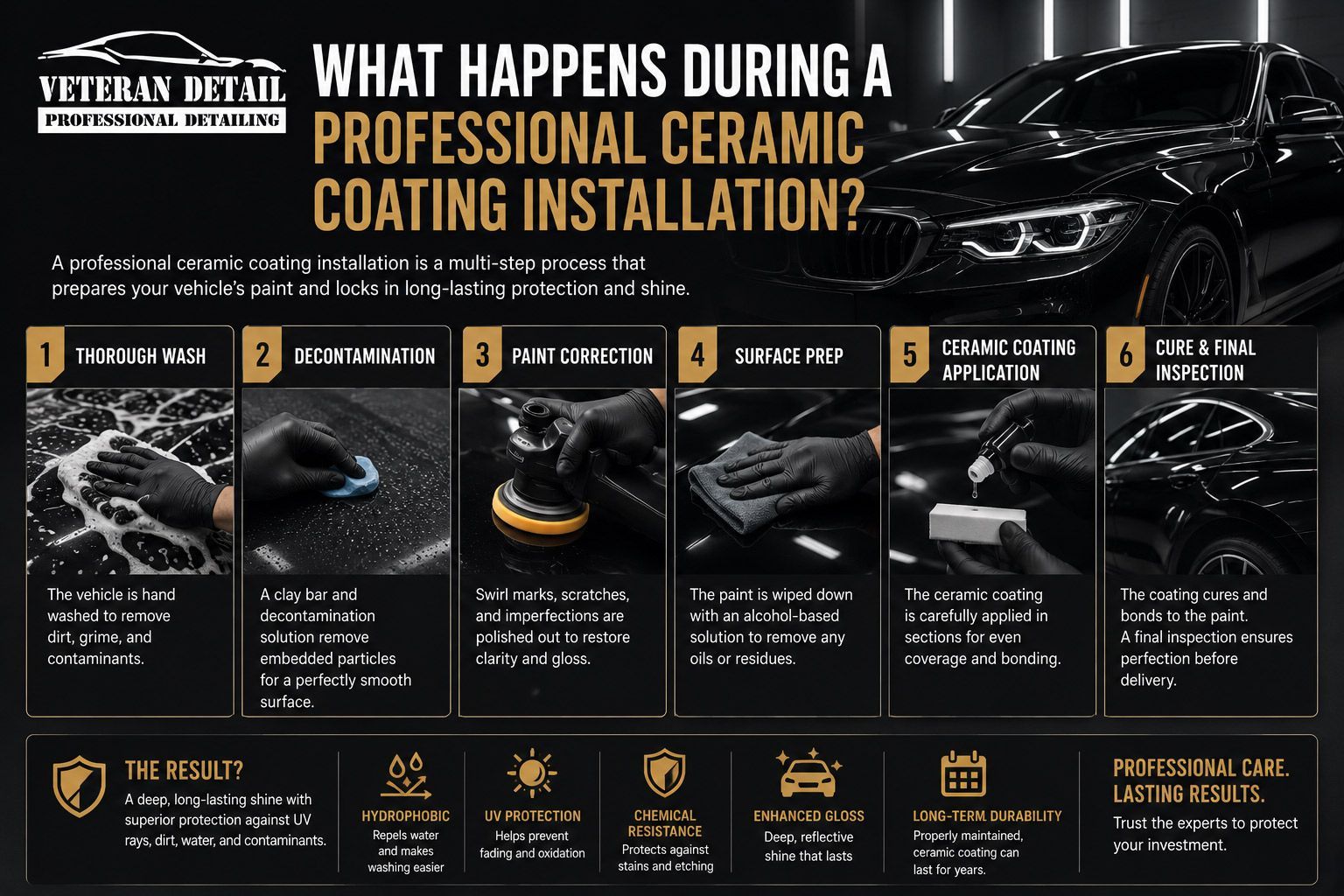
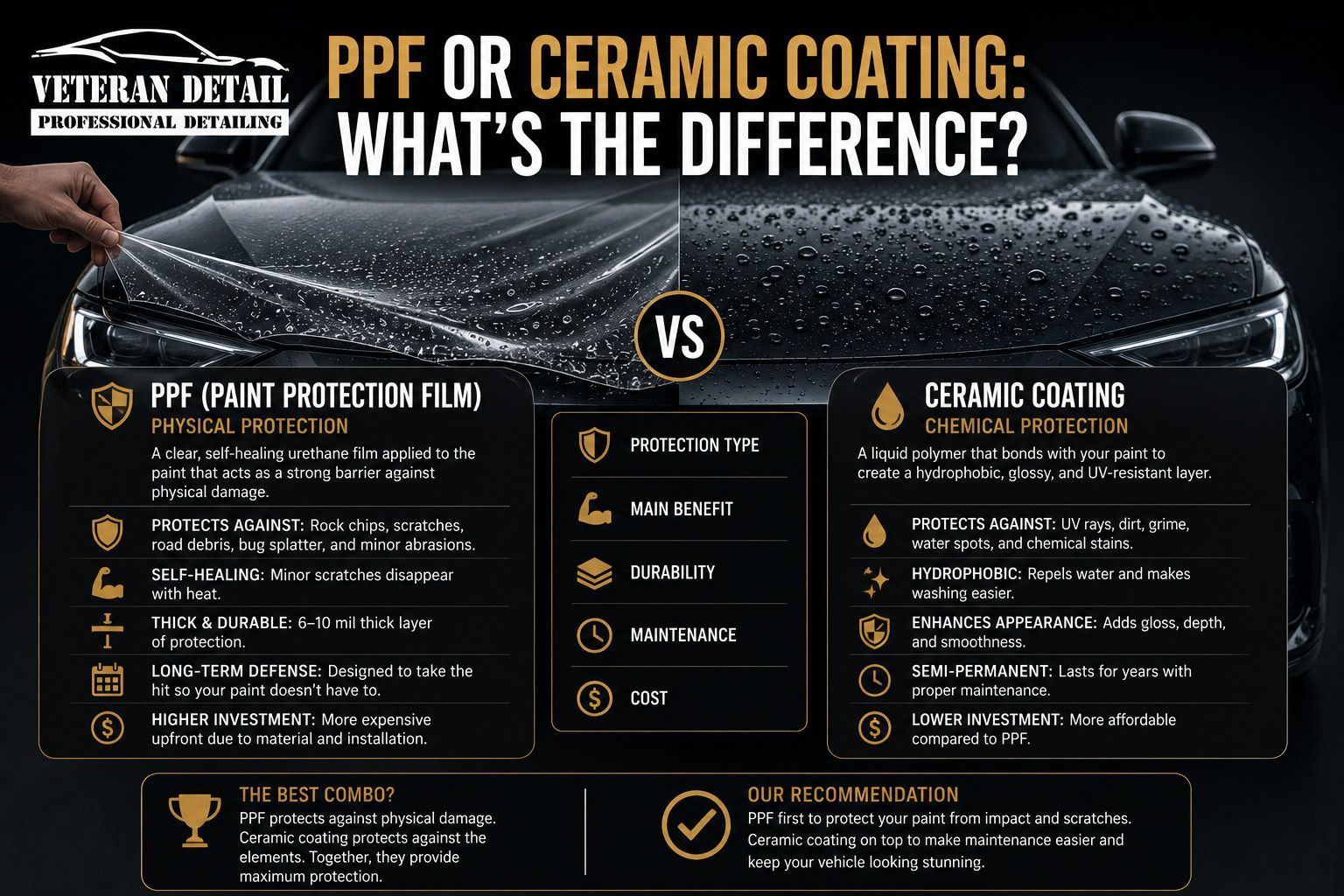
Ceramic coating is a liquid polymer that bonds chemically to exterior paint surfaces. It creates a hydrophobic, UV-resistant layer that protects against oxidation, water spotting, environmental contaminants, and light scratches. It also significantly reduces the effort required to keep the exterior clean. Ceramic coating does not apply to glass in the same way window tint does, and they serve complementary rather than competing functions.
Side-by-Side Comparison
The table below compares the two services across the factors most relevant to a vehicle owner deciding where to invest first:
| Factor | Window Tint | Ceramic Coating |
|---|---|---|
| Primary benefit | Heat, UV, and glare reduction inside cabin | Paint protection, hydrophobic exterior surface |
| Surface treated | Interior glass surface | Exterior paint, trim, and wheels |
| Installation time | 2–4 hours typical | 1–3 days including prep and cure |
| Cost range (Utah market) | $250 – $700 | $800 – $3,500+ |
| Durability | 5–10 years (quality film) | 5–10 years (professional grade) |
| Immediate daily benefit | Heat and glare reduction on day one | Easier washing and surface protection |
| Prerequisite steps | Clean glass surface | Paint decontamination and correction |
| Can be done simultaneously | Yes, on different surfaces | Yes, on different surfaces |
When Window Tint Should Come First
Window tint is the stronger first choice in several specific situations. If you're buying or have recently purchased a vehicle and driving it through a Utah summer without tint, cabin heat is an immediate, daily discomfort issue. Tint addresses that problem from the day it's installed, on every single drive. The benefit is tangible and constant.
Tint also protects your interior—dashboards, leather, fabric, and trim materials—from UV degradation. Once UV damage appears on interior surfaces, it can't be reversed without replacement. Installing tint early preserves interior condition before fading and cracking set in.
For vehicle owners in Lehi, UT and throughout northern Utah's hotter valleys, window tint often makes more immediate sense as a first investment simply because the benefit is felt on the very next drive. The lower entry cost also makes it accessible as a standalone service while saving for a ceramic coating package.
When Ceramic Coating Should Come First
Ceramic coating becomes the stronger first choice when exterior paint protection is the primary concern. If you've just taken delivery of a new vehicle or purchased a used vehicle in excellent condition, ceramic coating at that point locks in the paint's condition before Utah roads have a chance to degrade it. Oxidation, water spotting, and road contamination accumulate over time—coating the vehicle early means the protection is in place before those issues begin.
Ceramic coating also makes sense first if your vehicle lives outdoors in the American Fork, UT area where UV exposure is intense and seasonal temperature swings are significant. Unprotected paint oxidizes faster under these conditions, and ceramic coating's UV-blocking properties slow that process substantially.
The other consideration is sequencing: ceramic coating requires thorough paint preparation and can include edge and trim work. Having the paint coated first means any subsequent window tint installation (which involves interior glass only) doesn't affect the exterior coating work at all. There's no technical reason they can't be done in either order or simultaneously—but if you're doing one at a time, coating the exterior while the paint is in its best condition is generally the smarter sequence.
Frequently Asked Questions
Can window tint and ceramic coating be done at the same appointment?
Yes. Because they apply to completely different surfaces—interior glass versus exterior paint—they can be performed at the same shop visit without one interfering with the other. Combining services at one appointment may also reduce total turnaround time compared to separate visits.
Does ceramic coating apply to windshields or windows?
Some ceramic coating products are formulated specifically for glass surfaces, providing hydrophobic properties that improve rain visibility and water beading. This is a separate product from exterior paint coating and a separate service from window tint. All three can be used together without conflict.
Will tint installation scratch or damage a freshly ceramic-coated car?
No. Window tint is applied to the interior surface of the glass. A professional tint installation does not involve contact with the exterior painted surfaces of the vehicle. If tint and coating are being done at the same shop, the work areas don't overlap.
Is there a warranty difference between the two services?
Both window tint and ceramic coating from professional installers come with product and installation warranties, but the terms differ. Quality window tint film typically carries lifetime warranties against bubbling, peeling, and color change. Professional ceramic coatings carry warranties ranging from 2 to 10 years depending on the product tier. Ask your installer for specific warranty documentation on both.
Which service has the better resale value impact?
Both improve resale value, but ceramic coating tends to have a more recognized impact because it directly preserves paint condition—the most scrutinized element of a used vehicle inspection. Tinted windows are a desirable feature but less tied to core condition assessments. If resale value is a primary driver, ceramic coating generally has a stronger effect.
Conclusion
There's no universal right answer to which service comes first—it depends on what's bothering you most about your current driving experience and what your vehicle needs most right now. If cabin heat and interior fading are daily annoyances, start with tint. If you've just bought a new vehicle and want to protect the paint before Utah roads get to it, start with ceramic coating. The good news is that both services complement each other, and at Veteran Detail you can get both in one place, often in one visit. Talk to the team about your vehicle's current condition and what's driving your decision—they'll help you build a sequence that makes sense.