How Much Does Window Tinting Cost for an SUV?
October 25, 2026
Why the Numbers Are Higher Than You Might Expect
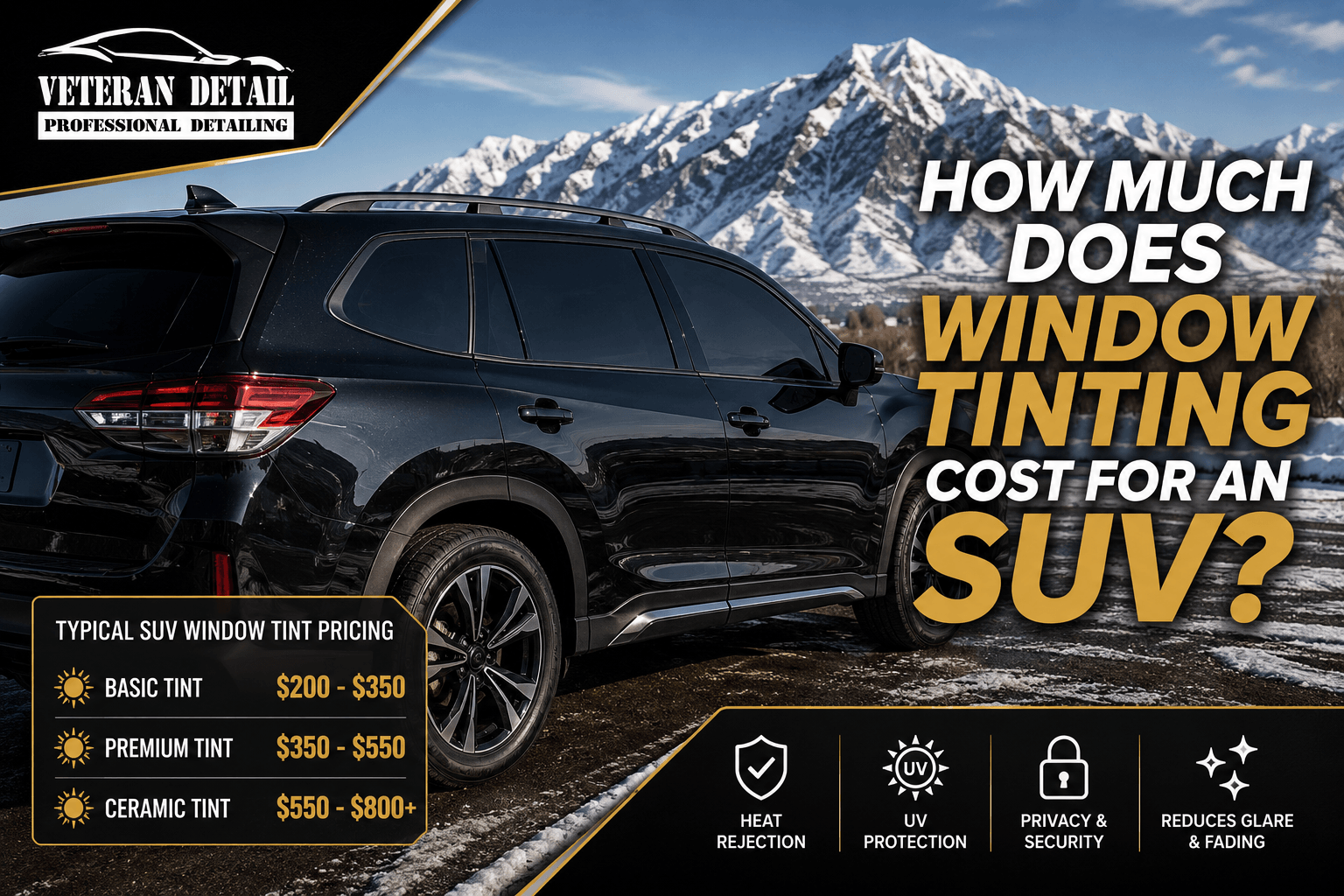
Window tinting an SUV is a different job than tinting a sedan — more glass, more complex shapes, and more surface area all push the cost above what smaller vehicles require. If you've been collecting quotes and wondering why the spread is as wide as it is, the explanation comes down to a handful of specific variables that every installer is pricing against. Here's what's actually driving the number.
Why SUV Window Tinting Costs More Than Sedan Tinting
The cost of tinting scales directly with the amount of glass and the complexity of the installation. SUVs have substantially more of both. A standard sedan has five window panels. Many SUVs have seven or more, including rear cargo glass and fixed quarter windows that sedans don't have at all. Five factors explain most of the price gap between the two vehicle types.
- More window panels — rear cargo glass and fixed quarter windows add both material and installation time that sedans simply don't require.
- Larger glass surface area — the rear windows on full-size SUVs like Suburbans and Expeditions are substantially larger than passenger car rear glass, requiring more film per panel.
- Curved and compound-angle glass — SUV rear hatches and quarter windows frequently require heat-forming the film to conform to the shape, which adds skill and time to the installation.
- Rear defroster lines — large hatch windows with integrated defrost elements require careful film application to avoid lifting the heating elements during or after installation.
- Panoramic roof panels — full-length panoramic glass is one of the most time-intensive tinting surfaces on any vehicle, requiring precise fitting across a large, highly visible area.
Window Tint Pricing for SUVs in the Utah Market
In the Provo, UT area and throughout Utah, professional window tint pricing for SUVs falls into ranges that reflect vehicle size and film quality. The figures below apply to professional installation by a reputable shop using quality film — not budget product or quick-service operations.
| SUV Type | Standard Film | Ceramic Film |
|---|---|---|
| Compact SUV (RAV4, CR-V, Equinox) | $280 – $400 | $450 – $650 |
| Mid-size SUV (4Runner, Explorer, Highlander) | $320 – $480 | $500 – $750 |
| Full-size SUV (Tahoe, Expedition, Suburban) | $400 – $600 | $600 – $900 |
| 3-row SUV with panoramic roof | $500 – $700 | $700 – $1,100 |
| Luxury SUV (Escalade, Navigator, GLS) | $450 – $700 | $700 – $1,200 |
Standard Film vs. Ceramic Film: Why It Matters More on SUVs
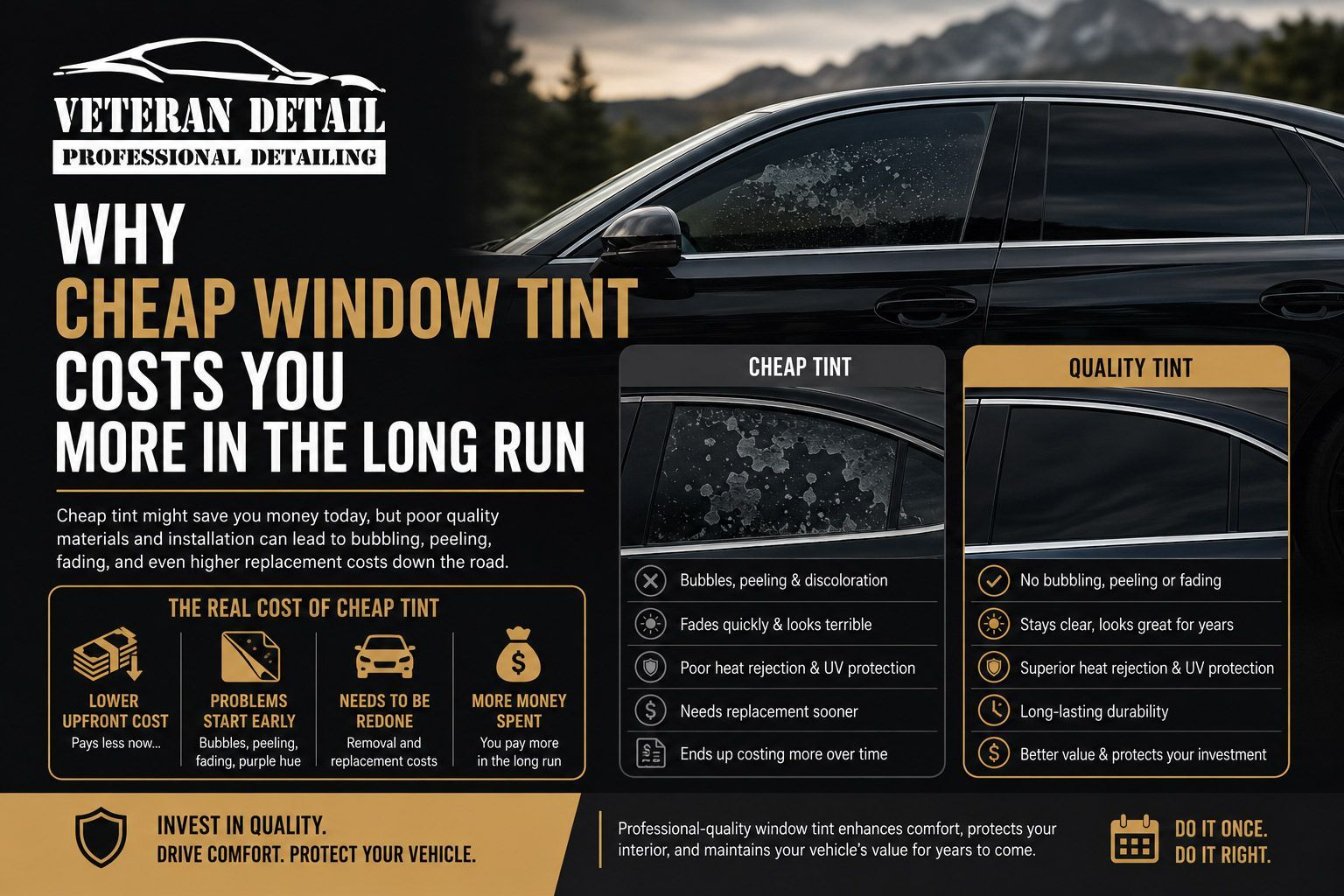
The performance gap between standard dye film and premium ceramic film is more noticeable on SUVs than on smaller vehicles. The reason is cabin volume — a larger interior retains heat longer and takes longer to cool down, which means the film's heat rejection performance has a more pronounced effect on daily driving comfort.
Standard dye film reduces visible light transmission and provides some heat blocking, but its infrared rejection performance is significantly lower than ceramic film. In a full-size SUV in a place like St. George, UT where summer temperatures can push interior cabin temperatures past 130 degrees in direct sun, the difference between dye film and ceramic film can be 20 to 35 degrees of perceived interior heat.
Ceramic film costs more upfront but delivers measurable, lasting benefits: better heat rejection that remains consistent over the film's lifespan, no purple or brown discoloration as the film ages, and higher UV blocking that protects third-row seating, cargo materials, and rear-facing child seats that standard film may not adequately shield.
Utah Tint Laws and How They Apply to SUVs
Utah's window tint regulations set minimum visible light transmission percentages that vary by window position. For SUV owners, the regulations are more permissive on rear glass than on front side windows — which matters when you're choosing darkness levels. Here's what the law requires.
- Front side windows (driver and passenger) must allow at least 43% visible light transmission.
- Rear side windows and rear cargo glass may be any darkness on SUVs and multi-purpose vehicles — Utah law places no VLT minimum on these panels.
- Windshields may only carry a non-reflective tint strip in the top 4 inches above the AS-1 line.
- Reflective tint is capped at no more than 20% reflectivity on any window.
- Medical exemptions are available for VLT requirements with proper documentation.
The practical result for SUV owners in American Fork, UT is that rear windows can be tinted significantly darker than front windows without legal concern, while front side windows must stay relatively light. A professional installer will walk you through darkness options that balance your privacy and heat rejection goals with the legal requirements for your vehicle.
Frequently Asked Questions
Can I get just the rear windows tinted to save money?
Yes. Partial tinting — rear windows only — is a common approach for SUV owners who want heat and privacy coverage in the passenger area while staying within legal limits on front windows. Shops price by panel, so tinting any subset of windows is straightforward. It's a practical starting point for owners working within a tighter budget.
How long does tinting take for a full-size SUV?
A complete tint installation on a full-size SUV typically takes three to five hours with a professional installer. Vehicles with panoramic roofs, complex curved glass, or multiple fixed rear quarter windows can take longer. Scheduling a morning appointment generally allows same-day completion.
Does tint affect backup camera visibility?
In most vehicles, backup cameras are mounted in trim or recessed separately from the glass, so tinting the hatch window doesn't affect camera function. Some vehicles have glass-integrated camera systems — professional installers account for this and work around the mounting point. Confirm with your installer when booking if this is a concern for your specific vehicle.
Is there a warranty on the installation?
Quality film installed by a professional shop comes with both a manufacturer's warranty on the film — covering bubbling, peeling, color change, and delamination — and an installation warranty on the workmanship. Premium film products typically carry lifetime warranties. Always request documentation for the specific film brand and product installed.
How long before I can roll down the windows?
Most professional installers recommend keeping windows closed for 48 to 72 hours after installation to allow the adhesive to cure against the glass. Rolling them down before full cure can cause the film to shift, lift at the edges, or crease — problems that require removal and reinstallation to fix.
Conclusion
Window tinting an SUV costs more because the job is genuinely more complex — more panels, larger glass surfaces, and more precision required on curved or compound-angle installations. The investment pays back in daily comfort, interior preservation, and privacy from the first drive. Film quality matters more on larger vehicles, where the performance gap between standard and ceramic film shows up every time you get in on a hot Utah afternoon. Veteran Detail tints SUVs of all sizes at their American Fork, UT shop using professional-grade film with documented heat rejection and UV blocking performance. Reach out to get a quote specific to your vehicle.